
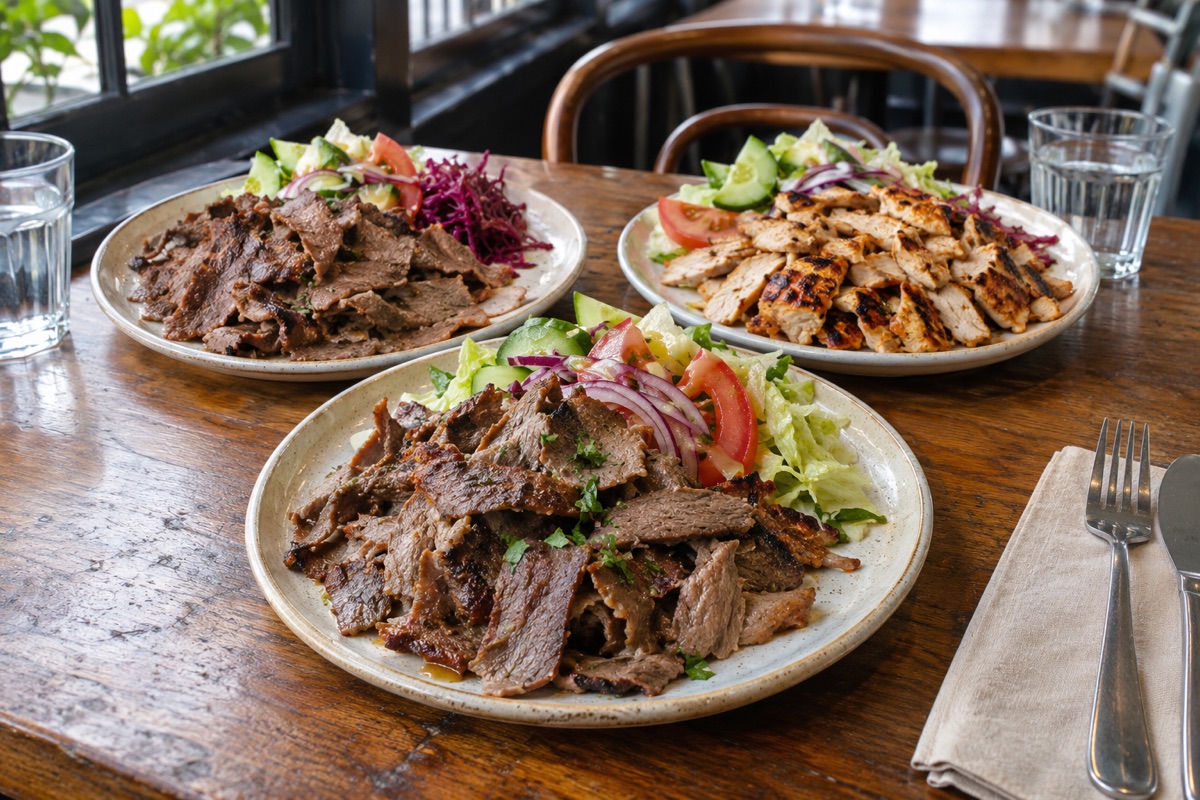
Compare dishes rather than labels alone
Choosing a kebab product begins with the meal you want to serve. A wrap, a rice plate and a sharing platter place different demands on the finished dish. Decide what you want the customer to experience, then compare products within that context. Avoid treating product names as a complete description of ingredients, preparation requirements or suitability.
Test the supporting ingredients
The same product can present differently with a different bread, salad or sauce. Prepare a complete dish and record the recipe used in your trial. Ask staff to follow the same portions when repeating it. This helps you compare alternatives on a consistent basis and identify whether a change is needed in the main product or elsewhere in the dish.
Check the operational fit
Ask for available formats and current product specifications. Review preparation requirements alongside the equipment and space you have. Test the workflow under conditions that resemble your own kitchen. Make your costing decisions from your observed portions and results, and confirm any assumptions with the supplier before committing to a menu change.
Choose a range you can explain
A useful menu gives each option a distinct role without making preparation unnecessarily complicated. You might start with a familiar option and add another after reviewing demand. Keep staff informed about the exact products being used. For product-specific ingredient, allergen or documentation questions, request the current information rather than relying on general descriptions.