
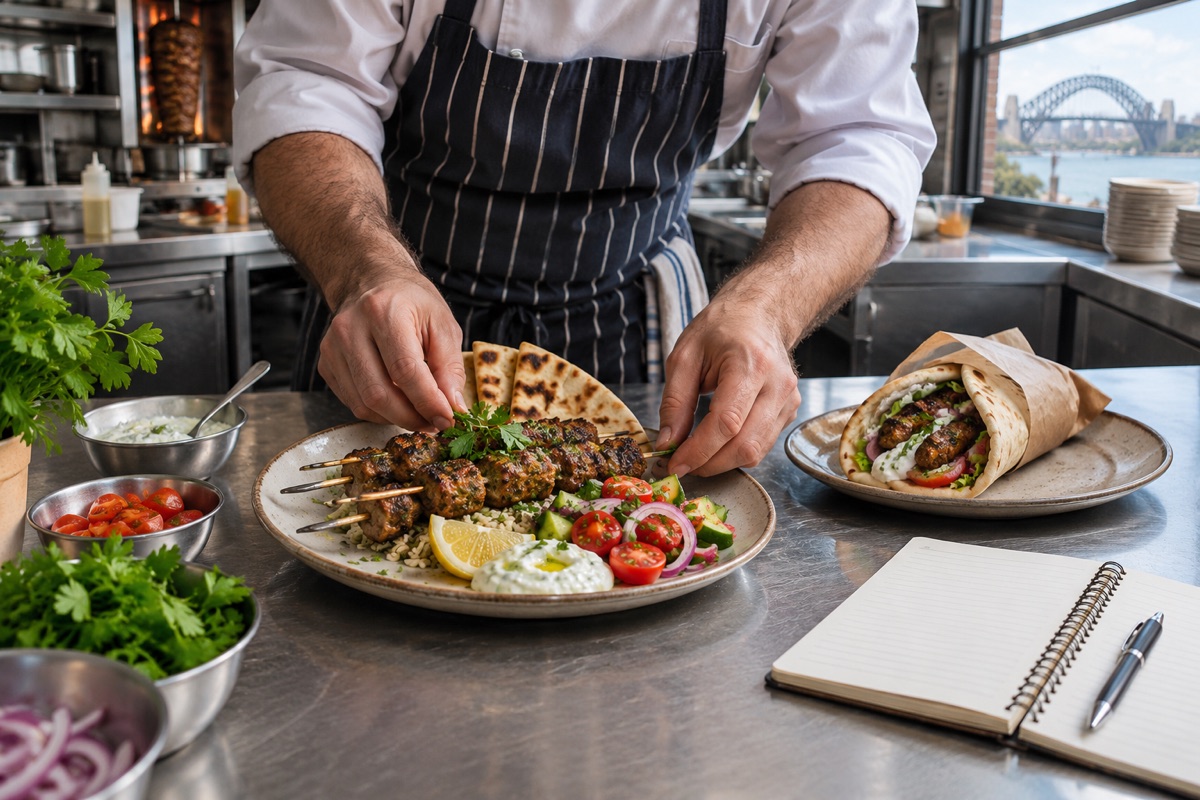
Start with the service you want to deliver
A kebab menu works best when it fits the way a restaurant operates. A casual lunch venue may favour wraps and bowls, while a seated evening service may need plated meals and sharing dishes. Begin with a short list of dishes, then identify the preparation steps, equipment and staff attention each dish needs. This gives your kitchen a practical starting point before you compare products.
Choose products with a clear role
Lamb, doner and chicken kebab can each support different menu ideas. Chicken shish can suit skewered dishes, while falafel adds another option for wraps and bowls. Give each product a reason to be on the menu. Consider how it pairs with your existing breads, salads, sauces and sides. Check individual product specifications before making ingredient or dietary claims.
Plan portions before setting prices
Trial a dish using the portion size you intend to serve. Record the amount of product, bread, vegetables, sauce and packaging used, together with preparation time. Your own trial provides a more useful basis for costing than an assumed serving yield. Repeat the trial during a representative service so that the dish is practical as well as appealing.
Prepare a useful supply enquiry
When contacting a wholesale supplier, include your venue location, proposed products and expected weekly quantities. Describe your cooking equipment and storage capacity, and ask which formats are available. Keep the initial range manageable, review actual sales and discuss changes as your menu develops. A clear brief helps both your kitchen and your supplier understand what the operation needs.